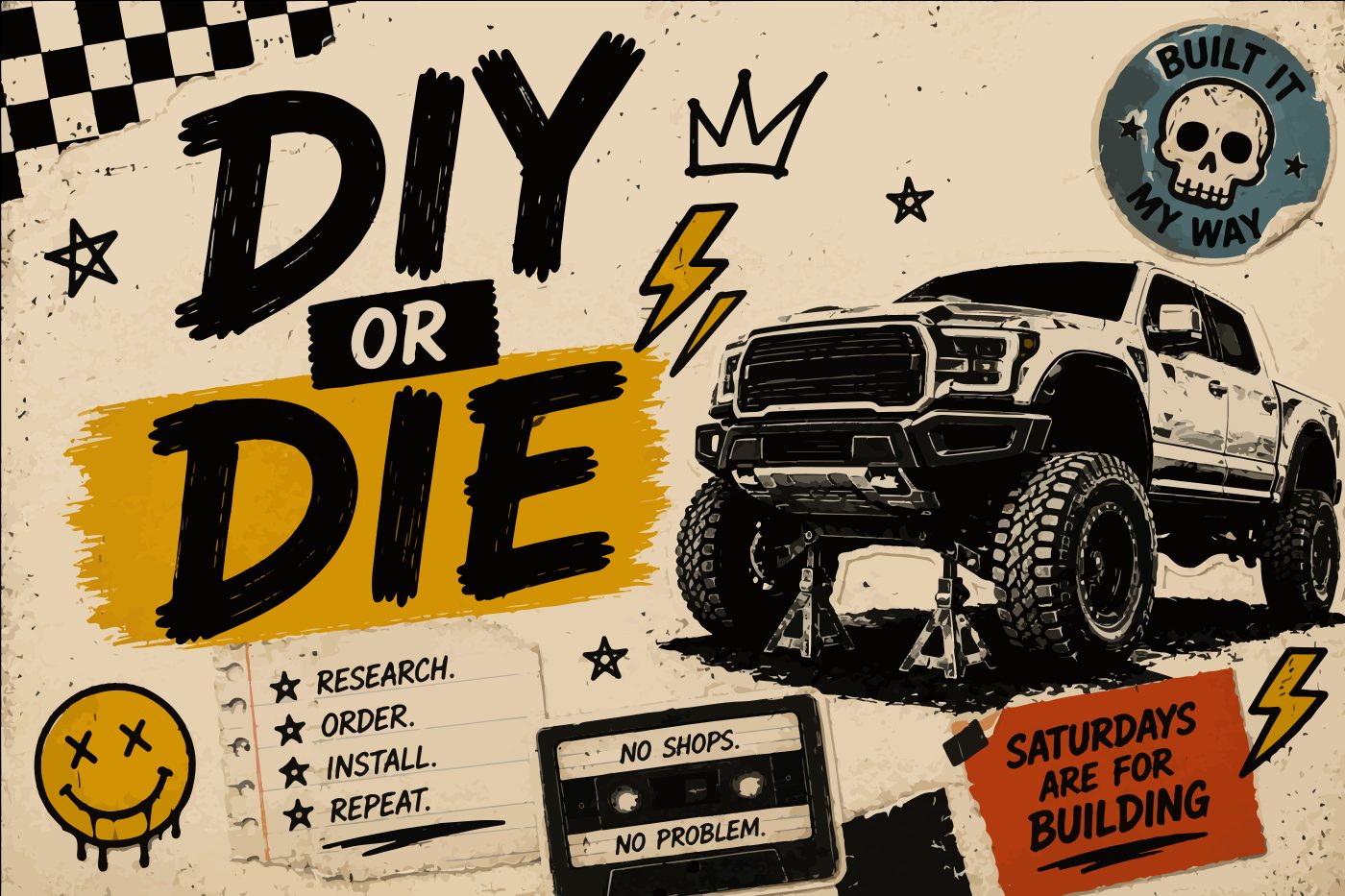
DIY or Die
The philosophy was always the same. The three chords just turned into torque specs.
The first bands we loved played shows in venues that used the word loosely. Basements. VFW halls. The back of a bar with fire code issues. The sound was bad in the way that live sound is bad when nobody in the building is getting paid to make it good, which is to say it was also loud and immediate and coming from people standing close enough to touch who were playing like they had something to prove, because they did.
You didn't need a label. You didn't need a booker or a manager or a publicist. You needed the instrument, enough practice to be dangerous, and the willingness to stand up in front of people and do the thing while they watched. The result was yours. Whatever it was, you made it, you stood behind it, and nobody could tell you whether it counted because you'd already decided it counted before you plugged in.
That is a very particular orientation toward the world. It is also, recognizably, the same orientation that makes us want to be under our own trucks on a Saturday rather than dropping them at a shop.
The Basement Show Economy
The DIY ethic that ran through that whole scene wasn't just philosophical. It was practical. Nobody was coming to do it for us. The show didn't book itself. The zine didn't print itself. The van didn't drive itself to the next city, and it didn't fix itself when it broke down two hours outside of wherever we were trying to get to.
We figured it out because there was no other option that didn't involve giving up, and giving up was not on the table. We asked whoever had done it before. We read whatever we could find. We made mistakes and absorbed them and did better the next time. The knowledge accumulated in a way that didn't come from formal instruction, because formal instruction wasn't available or particularly interested in what we were trying to do.
That's exactly how we approach a build now. Not with the confidence of someone who has always known how, but with the specific calm of someone who has learned enough hard things in enough unforgiving environments that one more hard thing is not a crisis. The service manual is dense. The forum thread is six years old. The bolt is seized in a way that's going to require creativity. None of this is a reason to stop.
The van didn't fix itself two hours outside of wherever we were trying to get to. We figured it out. The truck is the same lesson.
What Gets Made in a Garage
There's a drawer in our garage, middle drawer of the main workbench, that contains a record of everything the truck has ever been. Receipts. Torque specs on index cards. Notes from the install that went sideways and what fixed it. A sketch of the suspension geometry from when we were working out the UCA clearance issue. Old fasteners saved for reasons that made sense at the time and still do.
It's not organized the way a filing system is organized. It's organized the way a record collection is organized, with an internal logic that we can navigate instantly and that would be opaque to anyone else. It is a document of attention. Proof of years of engagement with this specific thing, this specific machine, in this specific way.
The trucks we've dropped at shops came back lifted. The ones we built ourselves came back with something else, a working knowledge of the vehicle that changes how we interact with it permanently. The sound that isn't right. The feel that's slightly off. The thing that needs attention before it becomes a problem. We hear it and feel it because we put the thing together. We put it together because we are the kind of people who have always done the thing themselves.
The Audience of One
One of the more interesting things about the DIY ethic, in music and in garages, is that it is almost completely indifferent to audience. The band in the basement isn't optimizing for a demographic. They're playing the thing they want to play the way they want to play it. If other people respond to it, great. But that's not the condition for doing it.
Our trucks operate on the same terms. The choices, lift height, wheel, tire, stance, are not made with a particular viewer in mind. They're made with the same internal standard that governs the record collection: does this accurately represent what we actually want, or are we compromising toward what we think we're supposed to want.
We've been practicing answering that question since we were thirteen years old with a Sharpie and a locker door. We know what we like. We know why we like it. We are not confused by the question, and we are not interested in changing the answer to make it more convenient for someone else to understand.
The band played the show because the show was worth playing. The truck got built because the truck was worth building. The reasons are the same. They have always been the same. The tools are just different.
Does this accurately represent what we actually want, or are we compromising toward what we think we're supposed to want? We've been practicing that question since we were thirteen.
The Torque Spec on the Index Card
In the middle drawer, written in the same handwriting that used to fill out setlists on the back of paper bags before shows, there's an index card with the torque spec for the front strut tower bolts. Next to it, smaller: first try was 10 ft-lbs under. Fixed on second pass. Check again at 1k miles.
This is what it looks like when people who have always paid attention pay attention. The music made us that way, or the music found us that way, or more likely both. And now here it is: the index card in the drawer, the truck on the stands, the playlist still running.
DIY or die is not a slogan for us. It's a description. It's just what we do. What we've always done. What we'll still be doing when the current build is finished and the next one has already started taking shape in the back of our minds, somewhere between the torque spec and the track listing, where it's always lived.
For the ones with the torque spec on the index card. Lift kits with verified fitment and real documentation. Liftnasium. Built by the people who do it themselves, for the people who do it themselves.