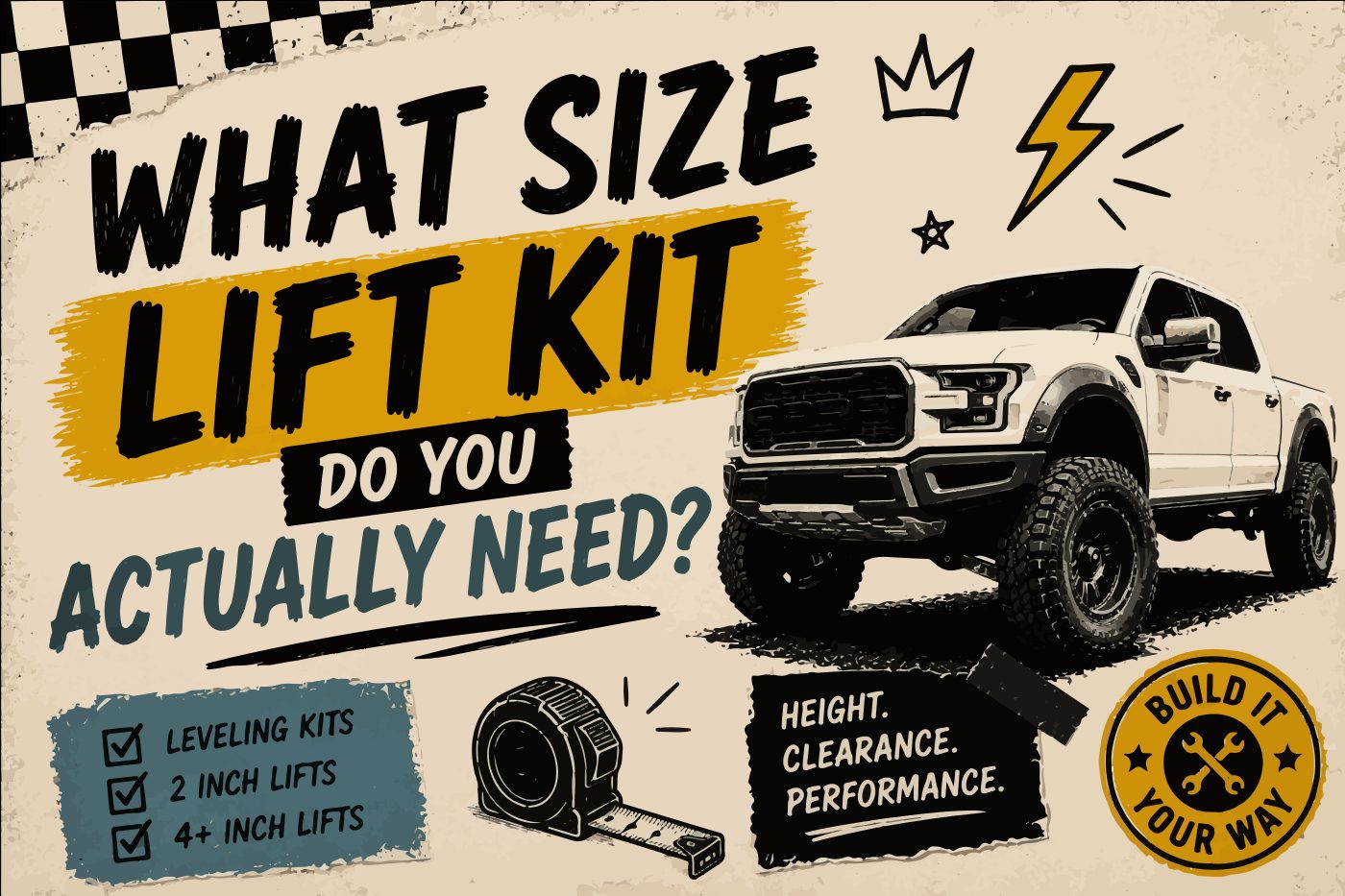
What Size Lift Kit Do You Actually Need? A Real Answer for Real Builds
Everyone wants to run 35s. Not everyone needs a 6-inch lift to do it. And a lot of trucks running 4-inch kits would have been better served by 2.5 inches and a set of quality shocks.
Lift height is one of the most misunderstood specs in the truck customization world. Bigger numbers get more attention on Instagram. But the right number for your truck depends on what you're actually trying to do, not what looks best in a parking lot.
This guide breaks down how to think about lift height based on tire goals, use case, and how hard you plan to push your rig.
Start With the Tire, Not the Lift
The most common mistake people make when sizing a lift is starting with the lift height. Don't do that. Start with the tire size you want to run and work backward.
The lift exists to give the tire clearance. The tire is the goal. The lift is how you get there.
Here's a general clearance map by tire size for most half-ton and three-quarter-ton trucks:
- Stock tires (up to 31"): No lift needed. A leveling kit handles stance.
- 32"-33" tires: 1.5"-2.5" leveling kit or small lift, depending on your trim.
- 33"-35" tires: 2.5"-4" lift. Most trucks fit 33s on a 2-inch level with minor or no trimming.
- 35"-37" tires: 4"-6" lift. This is where you start paying attention to UCA clearance and CV angles.
- 37"+ tires: 6"+ lift. Full suspension territory. Long-travel setups, aftermarket UCAs, extended brake lines.
Important caveat: these ranges are generalizations. Your specific truck, make, model, year, trim, and whether it has factory overland equipment, will tighten these numbers. Always verify fitment against your actual vehicle config.
The Four Lift Categories
1. Leveling Kits (1"-2.5")
Leveling kits remove the factory rake. They're the simplest install in the category, usually a front strut spacer that drops in without touching the stock springs or struts. Great for: daily drivers who want better stance and room for slightly larger tires. Not great for: serious off-road use or tires larger than 33s on most platforms.
2. Small Lift Kits (2"-3.5")
This is the sweet spot for most daily-driven trucks that see occasional trail use. You get meaningful tire clearance (33"-35" on most half-tons), better ground clearance, and improved looks without compromising daily driveability. Quality kits in this range include upgraded shocks and maintain reasonable CV angles.
3. Mid-Range Lifts (4"-5")
35"-37" tire territory. At this height you need to start thinking about upper control arms, alignment cams, and extended brake lines. A 4-inch kit on a properly spec'd platform is a capable trail and overlanding setup. On a daily driver that only sees highways, it's overkill, and you'll feel it in the ride quality if the kit isn't dialed in.
4. Full Suspension Lifts (6"+)
If you're here, you already know what you're doing. Or you should. A 6-plus inch lift is a serious platform modification that touches brake lines, driveshafts, differential drop, and potentially steering geometry. Not for first-time installers. Not without professional alignment immediately after. But for the right build, trail rig, rock crawler, dedicated overlander, it's the only answer.
How Your Use Case Should Drive the Decision
Answer these three questions before you buy anything:
- What tire size am I actually running (or building toward in the next 12 months)?
- What percentage of my miles are on pavement vs dirt vs hard trails?
- Am I willing to do the maintenance a bigger lift requires (alignment, extended wear cycles on UCAs and ball joints at higher angles)?
If 90% of your miles are pavement and you want 33s, a 2-inch level or small lift is your answer. If you're running 35s and hitting trails monthly, a quality 3.5"-4" kit with UCAs is worth every dollar. If you're chasing 37s for serious wheeling, build for it properly or don't build at all.
The Budget Trap
The cheapest lift kit that fits your truck is rarely the cheapest option over time. Low-cost spacer lifts on top of worn OEM struts feel terrible within 10,000 miles. Poorly engineered kits can put your CV axles at angles that accelerate wear.
Buy once, buy right. If you can't afford the right kit this month, save another month. Your drivetrain will thank you.
Not sure which lift size is right for your truck? Use the Liftnasium fit tool, enter your year, make, model, trim, and target tire size. We'll tell you exactly what range works and why.